
 © All rights reserved
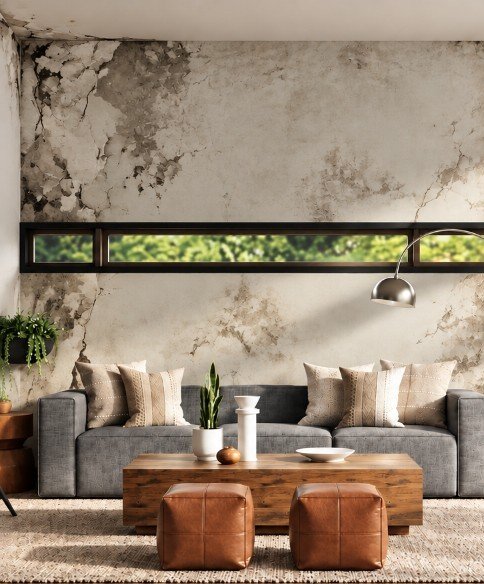
Why paint peels
- Moisture behind the paint — the most common cause. Water pushes the paint film off the wall.
- Poor surface preparation — painting over dust, loose old paint or unprimed putty.
- Wrong paint for the surface, such as interior paint used on an exterior wall.
- Painting in humid or wet conditions, before the wall is fully dry.
Find where the damp is coming from
Damp patches near the floor usually mean rising damp from the ground. Patches on ceilings often come from the terrace or a bathroom above. Patches on outer walls point to cracks or porous exterior surfaces. Patches near bathrooms and kitchens may be leaking concealed pipes.
White, powdery salt deposits (efflorescence) are a clear sign that water is moving through the wall.
The right repair process
- Stop the water source — terrace waterproofing, crack sealing, pipe repair or bathroom re-grouting.
- Let the wall dry completely. This can take a few days to a few weeks.
- Scrape off all loose and peeling paint and remove salt deposits.
- Apply a damp-proof or waterproof primer on affected areas.
- Re-putty and sand to get a smooth surface.
- Repaint with a suitable emulsion — two coats.
What not to do
Don’t apply putty and paint over a wet wall, and don’t rely on “anti-damp” paint alone when there is an active leak. The patch will return, usually bigger, after the next rain.
Serving homes near you
Ghar Upgrade provides house painting services in Hyderabad for homes in KPHB and across Kukatpally, Miyapur, Nizampet, Hafeezpet, Chandanagar, Lingampally, Kondapur, Madhapur, Gachibowli and Pragathi Nagar — and all over Hyderabad.
Frequently asked questions
Can I just paint over a damp patch?
No. Paint won’t stick to a damp wall for long. The source of moisture must be fixed and the wall dried before repainting.
Is this a painting job or a waterproofing job?
Usually both. The waterproofing fixes the cause, and the painting restores the finish. Doing them together with one team avoids gaps between the two.